
What to Do After the San Juan River Flood in Pagosa Springs
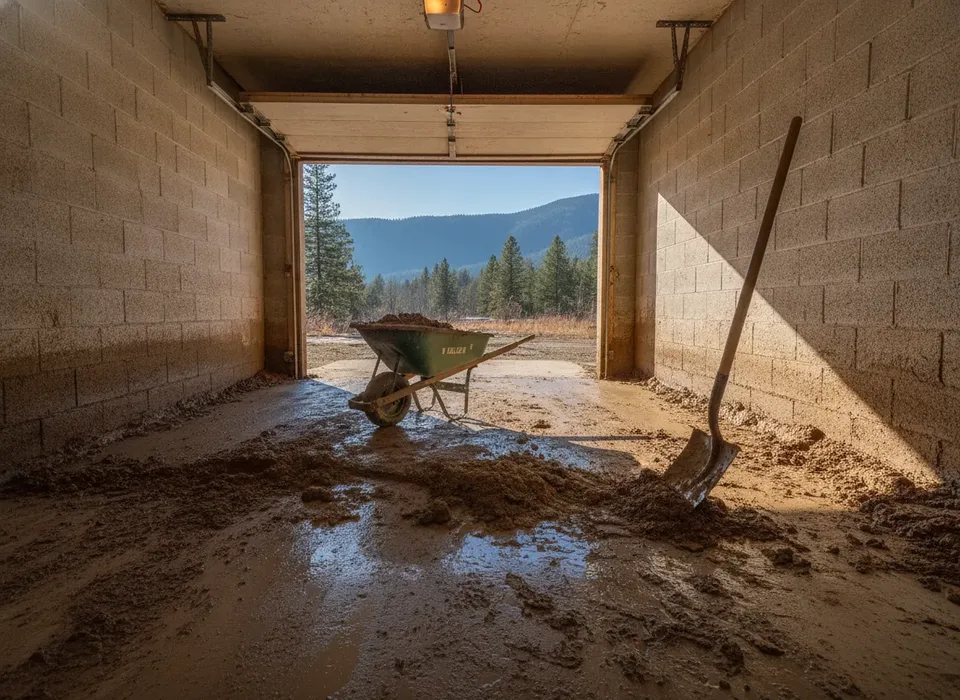
This guide is for anyone in Pagosa Springs or Archuleta County looking at a wet house, a muddy garage or a flooded crawl space and wondering what comes first. It is written as a list you can work through on a phone. Every flood figure here is dated, because the situation is still moving.
Where things stand as of November 1, 2026
The San Juan River at Pagosa Springs crested at 15.02 ft on October 23, 2026, the second-highest crest on record at that time (the 1911 record is 17.8 ft, per the National Weather Service). A second crest is forecast for the night of November 1, 2026: the NWS forecast was 22.0 ft, and Archuleta County, relayed by the Town, forecast about 19.71 ft. Mandatory evacuations were in effect and US 160 was closed to inbound traffic. If you are under an evacuation order, leave now and come back to this page later.
Step 1: Stay safe before anything else
- Do not go back into a flooded building until officials say it is safe. Floodwater can hide washed-out ground, open manholes and debris.
- Turn off power at the main breaker only if you can reach it without standing in water. If you can't, leave it and call the utility.
- Treat floodwater as dirty. The EPA and CDC warn that it can carry sewage. In 2026 the Town reported that sewer lift stations were overwhelmed (Pagosa Springs Sun, October 29, 2026). Wear rubber boots and waterproof gloves.
- Throw out food from a flooded fridge or freezer. Archuleta County Public Health (ACPHD) suggests a tetanus booster if your last one was more than 5 years ago, and see a doctor about any symptoms.
Step 2: Photograph everything before you move it
Take wide photos of each room, then close-ups. Shoot the waterline on walls, the mud on floors, damaged furniture, appliances and the outside of the house. Video is fine too. The Town's recovery guidance asks residents to document damage before cleanup, keep receipts and save samples where it is safe to do so. It also notes that documentation does not guarantee eligibility for any program.
A few habits help later:
- Say the date and room out loud when you start a video.
- Keep a small swatch of carpet or flooring from each room before it goes out.
- Start a simple list of damaged contents with rough age and price.
The flood claim documentation page goes into photo logs, moisture readings and contents lists in more detail.
Step 3: Call your insurer and report the damage
Call the company that wrote your flood policy, if you have one, and your homeowners insurer. Standard homeowners policies generally exclude flood, according to the Colorado Division of Insurance, but report it anyway and let them tell you what applies. If you carry National Flood Insurance Program (NFIP) coverage, the signed proof of loss is generally due within 60 days of the loss unless FEMA extends that deadline. In Colorado, an insurer must send you a copy of your policy within 3 business days of your request (C.R.S. 10-4-110.8), so ask for it now if you can't find yours.
More detail: does homeowners insurance cover flood in Colorado and NFIP claim steps and proof of loss.
Step 4: Report damage to the County and look at free help
Free help comes first. Before you hire anyone, check these:
| Resource | What it does | Status as of Nov 1, 2026 |
|---|---|---|
| Crisis Track (Archuleta County) | Report damage and unmet needs to the County | Open since Oct 29, 2026. For reporting only; it is not an aid application. |
| Crisis Cleanup, 970-283-7325 | Volunteer muck-out, debris and mold help | Through Nov 6, 2026 per the Town; check current status. Help is not guaranteed because of demand. |
| 211 Colorado | Shelter, housing, food and financial help referrals | Call 211 or visit 211colorado.org |
| FEMA Individual Assistance | Federal aid to households | Not approved. The Oct 31, 2026 request covers public assistance and hazard mitigation only. |
For how federal aid decisions work, read FEMA and SBA help for the Archuleta County flood.
Step 5: Start drying as soon as it is safe
Time matters for mold. The EPA says that if wet materials are dried within 24 to 48 hours, in most cases mold will not grow. After a disaster, the EPA advises assuming you have mold if the home could not be dried in that window. That isn't a reason to panic. It is a reason to get water out and air moving once you are allowed back in.
- Open windows if the weather allows and run fans pointed out of the house.
- Pull wet rugs, cushions and boxes out to dry or to discard.
- Keep the furnace off until it has been checked if water reached it.
Larger losses usually need extraction equipment, dehumidifiers and moisture readings. See flood cleanup and water extraction and structural drying.
Step 6: Ask about asbestos before tearing out drywall
The Town and the County warn that drywall in older homes may contain asbestos in the joint compound or tape. Colorado's Regulation 8 applies to single-family homes and requires inspection before disturbing more than small amounts (32 sq ft of surface or 50 linear ft of pipe). A flooded room's drywall can pass 32 sq ft quickly. Ask any company you hire whether testing is needed before tear-out. Homes built before 1978 also raise lead paint questions under the EPA Lead-Safe rules.
Step 7: Sort debris the way the sites require
- Town wood-only site: South Yamaguchi, 976 S. 5th St, for properties inside Town limits only. Wood only.
- County wood-only site: CSU Extension Office, 344 B Hwy 84, for Archuleta County properties only. No other materials.
- Archuleta County Landfill, 9179 CR 500: flood-damaged appliances, belongings and drywall, with drywall separated before you arrive. Disposal fees are the responsibility of the individual.
As of November 1, 2026, no curbside debris pickup had been announced.
Step 8: Check permits before rebuilding
Archuleta County requires a Floodplain Development Permit before any work in the floodway or floodplain. Inside Town limits, contact the Town Building Division. Work in a river, stream or streambank may also need U.S. Army Corps of Engineers authorization. Ask the Town or County whether a substantial damage determination applies to your house before you rebuild.
Step 9: Wells and septic need their own steps
If you are on a private well, ACPHD says to turn off power to the well before any inspection and not to turn the pump on until it has been inspected. Use other water for drinking and bathing until it has been disinfected and tested. For septic, let the system dry and limit use, and don't pump the tank until groundwater drops. The well and septic guide covers this step by step.
Step 10: Hire carefully
Colorado has no state license for water damage restoration or mold remediation. Check these instead:
- A Town of Pagosa Springs business license, if the work is inside Town limits (the Town requires it for contractors and all their subs).
- A certificate of insurance.
- A state plumbing or electrical license for any plumbing or electrical work.
- A written, itemized estimate before work starts.
- IICRC training is a useful extra, not a legal requirement.
The Town lists red flags: upfront fees, demands for immediate payment, refusing to show credentials and asking for personal or financial information. Colorado's price-gouging law (C.R.S. 6-1-730) covers repair and cleanup services during the declared disaster period. Complaints go to the Colorado Attorney General.
When you are ready for written quotes, Pagosa Springs Water Damage Pros can pass your details to independent local restoration companies through the free quote form. It is a free quote service, not a contractor and not a government program. For typical national price ranges, see the water damage cost guide, and for the full dated recovery picture, see the Pagosa Springs flood 2026 recovery guide.
Frequently asked questions
When can I go back into my flooded house?
Only when officials say it is safe. As of November 1, 2026, mandatory evacuations were in effect ahead of a forecast second crest. Follow the Town of Pagosa Springs and Archuleta County for re-entry updates.
Should I clean up before the insurance adjuster comes?
Take photos and video first, then start removing water and wet items so damage doesn't spread. Keep samples of flooring and receipts for anything you buy. Ask your insurer what they want you to keep.
Is there free help with mucking out?
Crisis Cleanup volunteers help with muck-out, debris and mold at 970-283-7325, through November 6, 2026 per the Town; check current status. Help is not guaranteed because of demand. 211 Colorado can point you to shelter, food and financial resources.
Where do I take flood-damaged drywall?
The Archuleta County Landfill at 9179 CR 500 takes flood-damaged drywall if it is separated before arrival, along with appliances and belongings. Disposal fees are the individual's responsibility. The Town and County wood-only sites take wood only.