
Flood Insurance Claim Documentation in Pagosa Springs, CO
Good records make a claim easier to support. This page covers what to photograph, what to log and what to ask restoration companies to give you in writing. It is documentation help only; Pagosa Springs Water Damage Pros does not handle, negotiate or adjust claims.
Get a Free Quote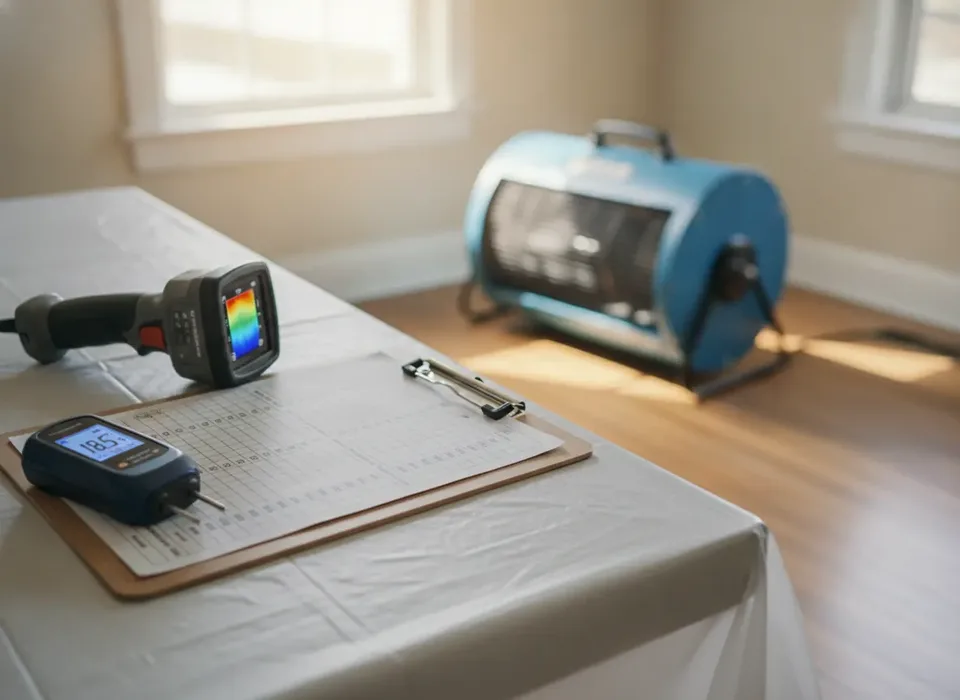
What is going on with your claim
An adjuster decides what a policy pays. What you can control is the record: what was damaged, how badly, when, and what was done about it. Restoration companies typically produce part of that record as they work, through photos, moisture readings and itemized estimates. You produce the rest.
Start before cleanup if you safely can. The Town of Pagosa Springs recommends photos, video and receipts before and during cleanup, and notes that documentation does not guarantee eligibility for any program. Keep everything in one folder, paper or digital, with dates.
About this page. Pagosa Springs Water Damage Pros is a free quote service. It is not an insurance company, a public adjuster or a law firm, and this is not legal or insurance advice. In Colorado, public adjusters must be licensed by the Division of Insurance. For questions about your policy, call your insurer or agent.
If you need a restoration company that will provide drying logs and photos, call (970) 408-5771 or use the quote form.
What restoration companies typically provide
Ask for these in writing at the start of the job.
Initial photos and scope
Photos of each room before work, the waterline height and a written list of what is wet and what will be removed.
Moisture map and daily logs
Readings at fixed points, taken each visit until dry goals are met. This shows why equipment stayed as long as it did.
Itemized estimate and invoice
Line items for labor, equipment days, materials removed and disposal, rather than one lump sum.
Removal records
Photos and measurements of carpet, drywall and insulation before they leave the house, plus samples where useful.
Completion report
Final readings and photos showing the structure is dry before rebuild.
What to document yourself
- Wide and close photos of every room, outside walls, the waterline and the source, with dates.
- A walk-through video narrating what you see, opening cabinets and closets.
- A contents list: item, room, brand or model, approximate age and what you paid. Photograph serial numbers and labels.
- Receipts for anything you buy: fans, tarps, bottled water, lodging, debris hauling.
- A contact log: date, who you spoke with at the insurer and what was said.
- Samples of carpet and flooring before disposal, if your adjuster has not seen them yet.
See the process page for where documentation fits in a typical job.
Flood claims after the 2026 San Juan River flooding
Flood is usually a separate policy. Standard homeowners policies generally exclude flood, according to the Colorado Division of Insurance. Flood damage is covered by an NFIP or private flood policy, if you have one. NFIP requires a signed proof of loss within 60 days of the loss unless FEMA extends that deadline. Mark the date on a calendar.
Federal assistance status. As of November 1, 2026, FEMA Individual Assistance has not been approved for the 2026 flooding. The October 31, 2026 request from the state covers public assistance and hazard mitigation only, and no SBA disaster declaration had been announced for the flood. That can change; check official sources. The County's Crisis Track portal is for reporting damage and needs, not an aid application. The 2026 flood recovery guide and our post on NFIP claim steps and proof of loss have more.
Second homes. If you are out of state, ask the restoration company to send dated photos and readings after each visit so your file stays complete.
Colorado insurance rules worth knowing
Your policy copy. Under C.R.S. 10-4-110.8, a Colorado insurer must provide a copy of your policy, including declarations and endorsements, within 3 business days of your request. Ask for it in writing.
Covered perils. For losses a homeowners policy covers, such as a burst pipe, the same statute sets rules on contents inventories and timing. Ask your insurer how those apply to your claim.
Roofing. If roof work is part of the claim, Colorado's roofing contractor law (C.R.S. 6-22) generally gives you 72 hours to cancel a roofing contract after an insurer denies the claim.
Hiring. Colorado has no state license for water damage restoration or general contracting. Inside Town limits, check the Town of Pagosa Springs business license. Ask for an insurance certificate and a written, itemized estimate, which also helps your claim.
What documented cleanup typically costs
| Item | Typical range | Source |
|---|---|---|
| Typical water damage job | $1,200–$5,000 | Fixr |
| Flood / flooded-basement cleanup | $4–$12 per sq ft | HomeGuide |
| Water extraction | $3.75–$7.50 per sq ft | Fixr |
Typical national published ranges, not local quotes (Fixr, HomeGuide, This Old House, HomeAdvisor; 2025–2026). Pagosa Springs quotes come from the companies, not from this site.
Detailed logs and photos are a normal part of most professional jobs, not usually a separate charge. Ask. The cost guide has a planning calculator.
When it is urgent
- You are about to throw out damaged items that have not been photographed.
- Your NFIP proof-of-loss deadline is coming up.
- Cleanup is starting and nobody has recorded the waterline.
- Your insurer has asked for records you do not have.
Questions to ask companies
- Will you give me daily moisture logs and photos?
- Will your estimate be itemized by room and line item?
- Can you send records directly to me and to my adjuster?
- Will you photograph and measure materials before removal?
Claim documentation FAQ
Can a restoration company handle my insurance claim?
No. A restoration company can document the damage and the work, and many send records to your adjuster. Negotiating a claim on your behalf is public adjuster work, which requires a Colorado Division of Insurance license. Keep control of your own claim and ask your insurer directly about anything you do not understand.
What is the NFIP proof of loss deadline?
NFIP requires a signed proof of loss within 60 days of the loss unless FEMA extends the deadline. Your adjuster may help prepare it, but it is your responsibility to submit it on time. Check FEMA's flood insurance pages or call your flood insurer for current deadlines.
Is FEMA assistance available for the 2026 Pagosa Springs flood?
As of November 1, 2026, FEMA Individual Assistance has not been approved for the 2026 flooding, and the state's October 31 request covers public assistance and hazard mitigation only. Report damage through the County's Crisis Track portal, keep your records, and check official sources for any change.
Should I throw out damaged items before the adjuster comes?
Wet items can be a health risk, so you may not be able to wait. Before disposal, photograph each item, note the brand, model and age, and keep small samples of carpet or flooring. Tell your insurer what you are discarding and why, and keep receipts for any hauling.
Get free quotes from companies that document their work
Mention that you need photos and moisture logs for a claim. Independent companies reply directly. No obligation.
Flood or water damage? Get free quotes.
Tell us what happened and independent restoration companies serving Pagosa Springs and Archuleta County can reply with no-obligation quotes.