
How Water Damage Restoration Works in Pagosa Springs
The usual order of work after a flood or leak, from safety to rebuild, so you can tell whether a quote covers everything.
Get Free Quotes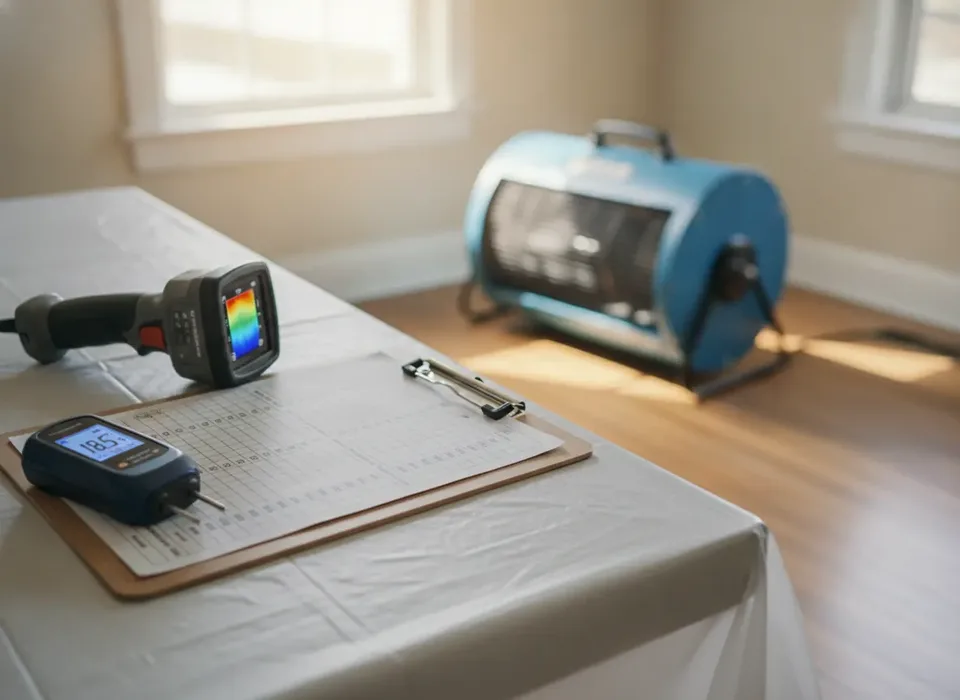
Before anything else
Pagosa Springs Water Damage Pros does not perform restoration work. The steps below describe what the independent companies you are matched with typically do, and what you can do yourself, so you can read an estimate with confidence. The details change with the water type, the age of the house and how long it stayed wet.
If the damage came from the October to November 2026 river flooding, start with the recovery guide. It covers free volunteer help, damage reporting and debris drop-off rules.
The nine steps
Safety and power
Stay out until officials say the building is safe. Floodwater can carry sewage, so wear boots and gloves. Turn off power at the breaker only if you can reach it without standing in water; otherwise wait for the utility or an electrician. If you have a well, turn off power to the well pump before anyone inspects it.
Stop the water source
For a burst pipe, shut the main valve. For a roof leak, a tarp may be the stopgap. For river or creek flooding, you wait until the water recedes. A state-licensed plumber handles pipe repairs; restoration companies typically coordinate with one when needed.
Photos and your insurer
Photograph and video every room, the water line on walls, and damaged belongings before anything is moved or thrown away. Call your insurer, start a claim, and ask for a copy of your policy. For NFIP flood policies, note the 60-day proof of loss deadline unless FEMA extends it.
Water and mud extraction
Companies typically pump standing water, extract water from carpet and pad, and shovel out mud and silt. Inspection with moisture meters and often a thermal camera maps how far water traveled into walls, subfloor and the crawl space. Ask for a copy of the written scope.
Tear-out, asbestos question first
Wet carpet pad, insulation and the lower part of drywall usually come out after floodwater. Before any wall is cut in an older home, ask about asbestos testing. Colorado Regulation 8 requires inspection before disturbing more than small amounts (32 sq ft or 50 linear ft in single-family homes). For pre-1978 homes, ask about EPA Lead-Safe practices.
Structural drying with moisture logs
Air movers and dehumidifiers run until framing, subfloor and other materials reach a dry standard. A good company takes readings at the same points every day and writes them down. Those logs show when drying is finished and help an insurance claim.
Cleaning and antimicrobial
Surfaces that touched floodwater are cleaned and disinfected, and an antimicrobial may be applied to framing. Belongings that can be saved are cleaned or packed out; porous items soaked by floodwater are usually discarded. Keep a list with photos for your contents claim.
Mold check
The EPA says that if materials are not dried within 24 to 48 hours after flooding, assume mold is growing. Before walls are closed, ask the company to check for mold and explain how any growth will be removed and contained.
Rebuild with permits
Before any work in the floodplain, Archuleta County requires a Floodplain Development Permit. Inside Town limits, contact the Town Building Division about building permits. Ask whether a substantial damage determination applies before rebuilding. Rebuild is often a separate estimate and sometimes a separate company.
How long it takes
Extraction is usually done in the first visit. Drying often runs several days and longer for dense materials, crawl spaces and log walls. Rebuild depends on permits, materials and scheduling. Ask each company for its expected timeline in writing, and treat it as an estimate.
What to ask before you sign
- Do you hold a current Town of Pagosa Springs business license (for work inside Town limits)?
- Can I see your certificate of insurance?
- Who does any plumbing or electrical work, and do they hold a Colorado state license for it?
- Will you test for asbestos before tear-out in an older home?
- Will I get a written, itemized estimate and daily moisture readings?
- Is any staff IICRC-trained? (Optional, but useful.)
See the cost guide for typical ranges and the structural drying and mold after flooding pages for more detail.
Flood or water damage? Get free quotes.
Tell us what happened and independent restoration companies serving Pagosa Springs and Archuleta County can reply with no-obligation quotes.